Catching sight of new waviness or dimples on your thighs in an unflattering fitting room mirror can feel disorienting, especially when your weight has not moved a pound.
The intuitive assumption is that lifestyle habits slipped: missed workouts, neglected routines, or too many takeout dinners. That self-blame is misplaced. Understanding what causes cellulite to shift across different decades reveals that your body is navigating predictable biological chapters.
The underlying architecture of female connective tissue is set from birth, but the quality, thickness, and elasticity of the skin resting on top change over time. Knowing how hormones, collagen loss, and genetics interact decade by decade helps you choose habits that support your skin right where it is today.
The anatomy stays the same, but the covering layer thins
Cellulite forms because of how female skin is constructed. Fibrous collagen bands (septae) run vertically through the subcutaneous layer, tethering the dermis down to underlying muscle. Recognizing that cellulite is a structural pattern rather than a surface flaw makes it easier to understand how it behaves. Fat compartments sit in the chambers between these cords.
When fat lobes press upward while the vertical bands pull downward, the surface puckers into dimples.
Think of this structure like a mattress. The underlying springs and interior tufting cords remain unchanged throughout adulthood. What shifts as we age is the mattress cover resting on top.
In our twenties, that cover resembles a thick, plush down duvet that easily masks the internal contours beneath. By our forties and fifties, the natural loss of dermal collagen thins that duvet down to a light linen sheet. The internal springs have not expanded; the covering blanket has just lost the density that kept the surface smooth.
Your 30s: the quiet drop in collagen production
Dermal collagen synthesis begins slowing down in our mid-twenties, decreasing by roughly one percent each year.
During our thirties, that gradual decline begins to show up in tissue density:
-
Slower cellular turnover: Fibroblasts (the specialized cells responsible for generating collagen and elastin) become less active.
-
Loss of dermal elasticity: The middle layer of skin gradually loses spring-back capacity, allowing underlying fat chambers to press upward more noticeably.
-
Early microcirculation changes: Blood flow through tiny capillaries in the lower body begins to slow down, contributing to subtle fluid retention in the thighs and hips.
At this stage, dimpling is often mild, appearing primarily when muscles contract or when sitting on firm surfaces. Supporting the skin barrier with daily hydration and sun protection helps preserve the collagen foundation you already have.
Your 40s and perimenopause: estrogen shifts and blood flow
The late thirties and forties introduce hormonal fluctuations that change how connective tissue behaves. Perimenopause causes estrogen levels to swing unpredictably before trending downward.
Estrogen receptors are distributed throughout blood vessels, fibroblasts, and adipose tissue. As estrogen declines, several structural shifts happen at once:
-
Diminished blood flow: Lower estrogen reduces microvascular circulation, decreasing oxygen and nutrient delivery to dermal tissue.
-
Fluid pooling: Capillary walls become more permeable, causing interstitial fluid to accumulate around fat lobules. That localized swelling pushes compartments upward, making dimples look more pronounced.
-
Rigid fibrous cords: Collagen fibers in the vertical septae begin to stiffen and lose their natural flexibility, pulling down on the skin with greater tension.
-
Accelerated dermal thinning: The dermis loses ground substance (natural hyaluronic acid) and collagen density, leaving the surface layer thinner and less resilient.
This combination explains what happens to collagen after 40 and why texture can change noticeably in your forties even with regular exercise. It is not an increase in fat; it is a structural transformation driven by endocrine biology.
Your 50s and beyond: distinguishing true dimples from skin laxity
Following menopause, the drop in estrogen becomes permanent. Clinical dermatological research indicates that women lose up to thirty percent of their remaining dermal collagen in the first five years post-menopause.
In your fifties and beyond, the visible pattern shifts from classic dimpled cellulite to a blend of cellulite and generalized skin laxity:
-
Draping and rippling: As structural elastin degrades, skin begins to drape and fold rather than creating distinct, isolated dimples.
-
Gravitational pull: Loss of dermal thickness allows tissue to sag downward over the knees and along the back of the thighs.
-
Loss of underlying support: Natural age-related muscle loss (sarcopenia) reduces the firm foundation beneath the subcutaneous fat layer, exaggerating surface laxity.
Distinguishing between true structural dimples (caused by tight cords) and laxity (caused by thinned, loose skin) is helpful because it guides your care. While tight cords require mechanical or deep thermal attention, laxity responds best to interventions that thicken the dermis and build underlying muscle tone.
The genetic blueprint you inherited
Hormones and age set the timeline, but genetics draw the initial map.
If your mother or grandmother had pronounced cellulite, your odds of developing a similar pattern are high. Genetic variations dictate:
-
Orientation of fibrous bands: How tightly the vertical cords are tethered to underlying fascia.
-
Distribution of estrogen and alpha-adrenergic receptors: Where your body naturally stores fat and how easily blood vessels release fluid.
-
Baseline dermal thickness: The natural density of your skin layer from the start.
Recognizing that genetics play a significant role frees you from the frustration of expecting topical solutions to rewrite your DNA. You cannot change your genetic blueprint, but you can support how that blueprint ages.
Tailoring your routine to your current chapter

Because connective tissue changes across each life stage, your approach to body care should evolve as well:
-
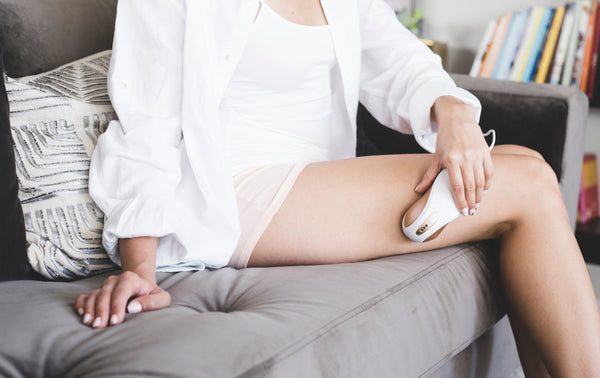
Focus on dermal thickness: Prioritize treatments that encourage fresh collagen synthesis deep within the dermis. Dedicated weekly sessions with at-home body skin tightening tools deliver non-invasive thermal energy that supports dermal density and smooths surface texture.
-
Build the muscle foundation: Consistent resistance training that targets the glutes, hamstrings, and quadriceps expands the muscular bed beneath the fat layer, creating a firmer, more supportive base.
-
Preserve surface barrier health: Daily humectants like glycerin and barrier-supporting ceramides keep the outer epidermis hydrated, maximizing light reflection and preventing crepey dehydration lines.
-
Support healthy circulation: Regular walking, adequate hydration, and gentle massage help keep interstitial fluid moving, reducing the localized puffiness that exaggerates dimpling.